Categories
Blog

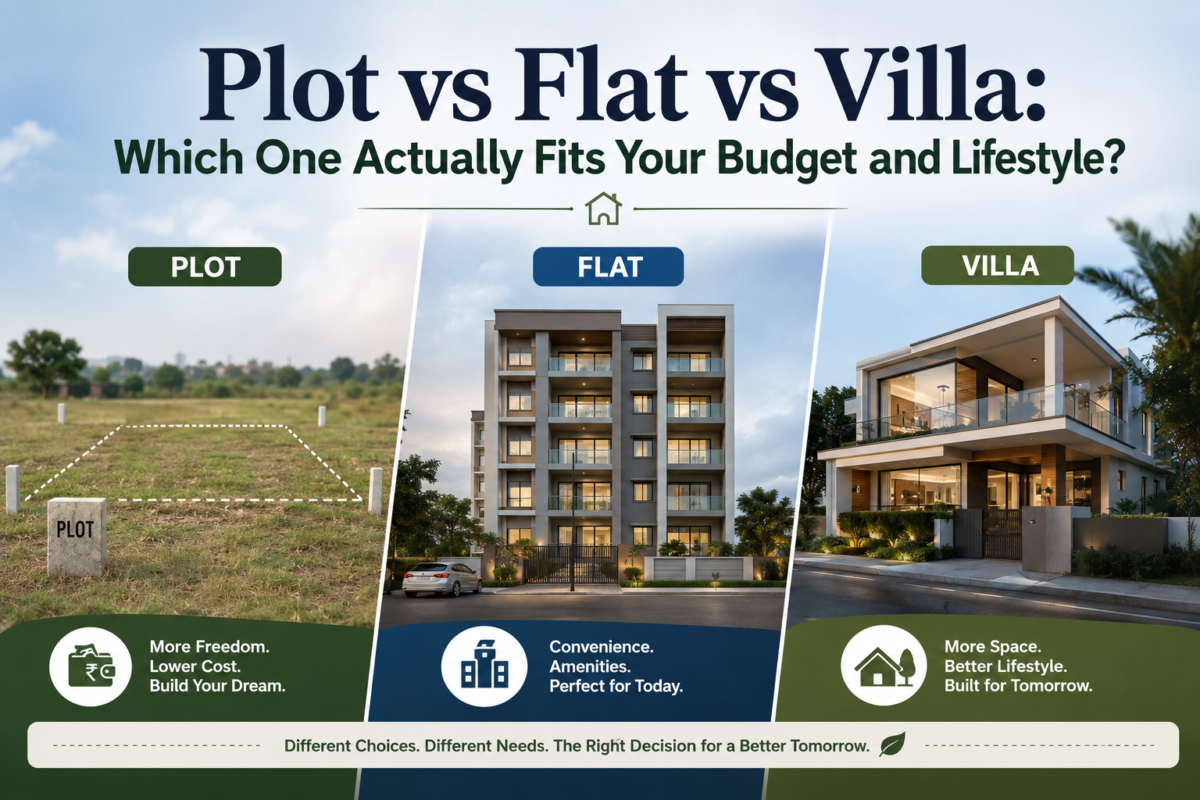
Plot vs Flat vs Villa

One of the first questions every property buyer faces isn’t “where” — it’s “what.” Should you buy a plot and build later, move into a flat, or go for a villa? Each comes with a different budget, a different lifestyle, and a different level of involvement. There’s no single right answer here — it depends entirely on what you actually need right now, not what sounds most impressive.

A plot gives you the most control — you decide the layout, the timeline, and how much you invest upfront versus over time. It usually costs less initially than a ready-built villa, but you’ll need to budget separately for construction, and the process takes longer before you can actually move in. Plots suit buyers who aren’t in a rush, want to build exactly what they envision, or are treating the purchase primarily as an investment property in a growing locality.

Flats work well for smaller families, working professionals, or first-time buyers who want to move in quickly without managing construction. Maintenance is typically shared across the building or society, which reduces the day-to-day responsibility on you. The trade-off is less space and less control over layout compared to an independent house or villa.

Villas suit families who want more space, privacy, and a premium living experience, often in established or upscale localities. They cost more than flats and require more personal upkeep, but they offer independence that apartment living simply doesn’t.

Ask yourself three honest questions: What’s my actual budget, including any construction costs? How soon do I need to move in? And how much time do I realistically want to spend managing maintenance? Your answers, combined with the “Who Should Choose What” guide above, will point you toward the right category faster than comparing prices alone.

A Residential Plot Is Ideal If You:
  • Want to build your dream home exactly as you imagine it
  • Are investing for the future rather than moving in right away
  • Don’t need to move in immediately
  • Prefer flexibility in design and construction timeline
A Flat Is Ideal If You:
  • Need a ready-to-move home without waiting
  • Want lower day-to-day maintenance responsibility
  • Have a moderate budget and want predictable costs
  • Prefer community living with shared amenities
A Villa Is Ideal If You:
  • Need more space for a growing or joint family
  • Value privacy and independence from shared walls
  • Have a larger family that needs room to spread out
  • Want a premium lifestyle in an established locality

There’s no universally “better” option between a plot, flat, or villa — only what fits your specific situation. If you’re still weighing the options, it helps to talk through your budget and priorities with someone who can walk you through real listings in each category.


Categories
Blog

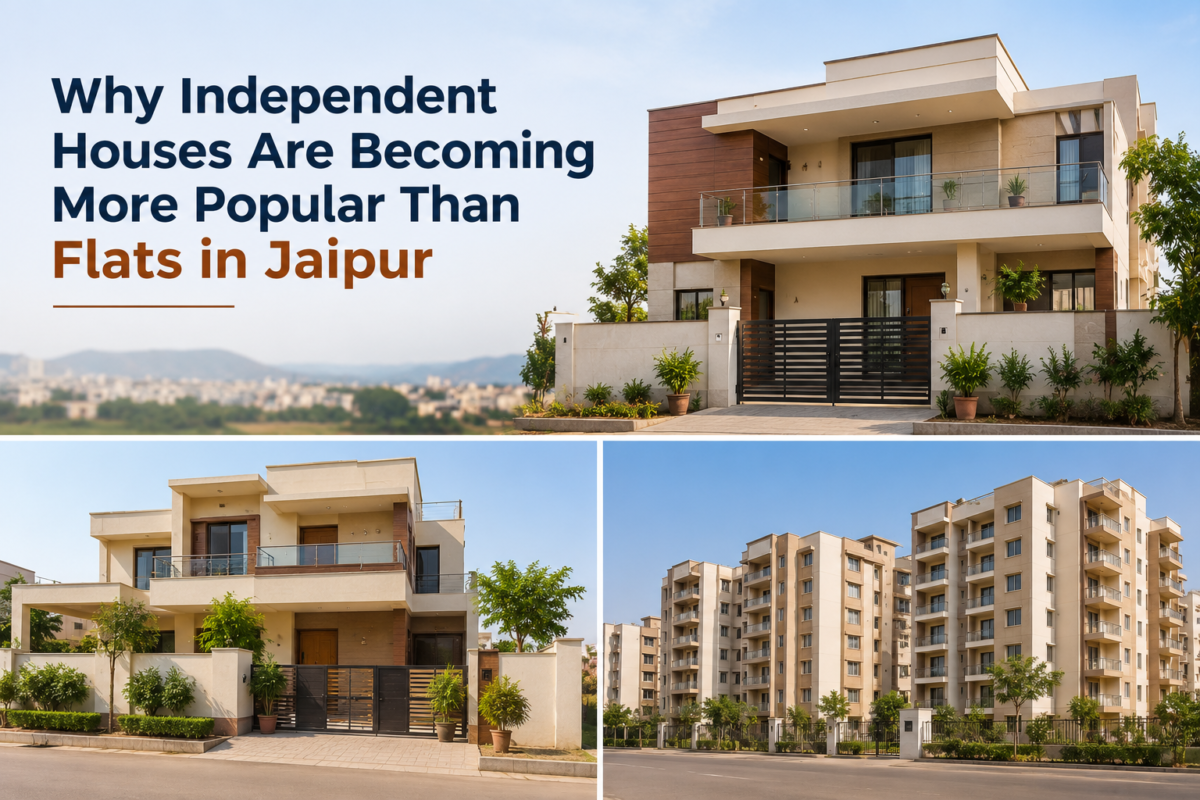
Why Independent Houses Are Becoming More Popular Than Flats in Jaipur

For years, flats were the default choice for buyers looking for convenience and lower upfront costs. But in Jaipur, that pattern is shifting — more families and professionals are choosing independent houses instead, even when flats are the more “obvious” option on paper. Here’s what’s actually driving that change.

Unlike in larger metros, Jaipur still offers independent houses at prices that don’t require a massive premium over flats in comparable areas. Buyers are realizing they can get significantly more built-up area and land ownership for a similar budget.

An independent house lets you modify, extend, or renovate without needing society approval or navigating shared building rules. For families planning to live somewhere long-term, that flexibility matters more than it might seem at first.

No Shared Maintenance Politics

Flats often come with society maintenance fees, shared decision-making, and occasional disputes over common area usage. Independent houses remove that layer entirely — what you maintain is entirely your own responsibility and your own choice.

Land Ownership as Long-Term Value

With an independent house, you’re not just buying a unit — you’re buying the land beneath it. Over time, land tends to hold and grow in value independently of the structure, which appeals to buyers thinking beyond just the next few years.

Better Fit for Multi-Generational Families

Many Jaipur families still live across multiple generations under one roof. Independent houses accommodate this far more comfortably than most flat layouts, which are typically designed for smaller nuclear families.

Is an Independent House Right for You?

An independent house works best if you’re settling long-term, have a multi-generational family, or want full control over renovations without society approvals. It’s also a good fit if you value land ownership over a shared building structure.

That said, if you travel often or prefer not managing your own security and upkeep, a flat with shared maintenance might suit you better. It really comes down to space, timeline, and how much day-to-day responsibility you want to take on.

Conclusion

Flats still make sense for many buyers, particularly those prioritizing low maintenance and quick move-in. But if space, ownership, and long-term flexibility matter more to you, it’s worth seriously considering an independent house before assuming a flat is the simpler choice.

Explore verified independent houses in Jaipur with VMR Group. Talk to a Property Expert to see what’s currently available.


Categories
Blog

Freehold vs Leasehold Property: What Every First-Time Buyer Should Know

If you’re buying your first property, you’ve probably come across the terms “freehold” and “leasehold” without a clear explanation of what they actually mean for you as a buyer. The difference isn’t just legal terms — it affects your ownership rights, resale value, and long-term flexibility.

What Is Freehold Property?

With a freehold property, you own both the home and the land beneath it — completely and forever. There’s no expiry date on your ownership. You can sell it, pass it on to your family, or make changes to it, without needing anyone else’s permission (as long as you follow local rules).

What Is Leasehold Property?

With a leasehold property, you don’t own the land forever — you’re allowed to use it for a fixed number of years, often 30, 60, or 99 years, based on an agreement with the actual landowner (usually a government body). Once that time period ends, you may need to renew the agreement, or in some cases, the land goes back to the original owner.

Why This Distinction Matters

Freehold properties are generally easier to resell, mortgage, and pass on to family members without added legal complexity. Leasehold properties can come with restrictions on renovations, resale, or transfer, and their value can be affected as the remaining lease term shortens.

Who Should Choose a Freehold Property?

Freehold tends to be the better choice if:

  • You’re buying a home you plan to keep long-term or pass on to your children
  • You want the flexibility to renovate, extend, or resell without needing anyone else’s approval
  • You’re a first-time buyer looking to avoid added legal complications

Leasehold can still make sense in specific situations, like when freehold options aren’t available in your preferred location, or the remaining lease term is long enough not to affect your plans. But between two similar properties, freehold is usually the simpler, safer pick.

How to Check Before You Buy

Always ask directly whether a property is freehold or leasehold before finalizing anything, and review the relevant documentation carefully. This single question can save you from future complications around resale or renovation.

Conclusion

Understanding this distinction early means fewer surprises later. If you’re unsure which type of property you’re looking at, it’s worth asking directly rather than assuming.

Have questions about a specific property’s ownership type? Talk to a Property Expert at VMR Group before you decide.


Go Top