

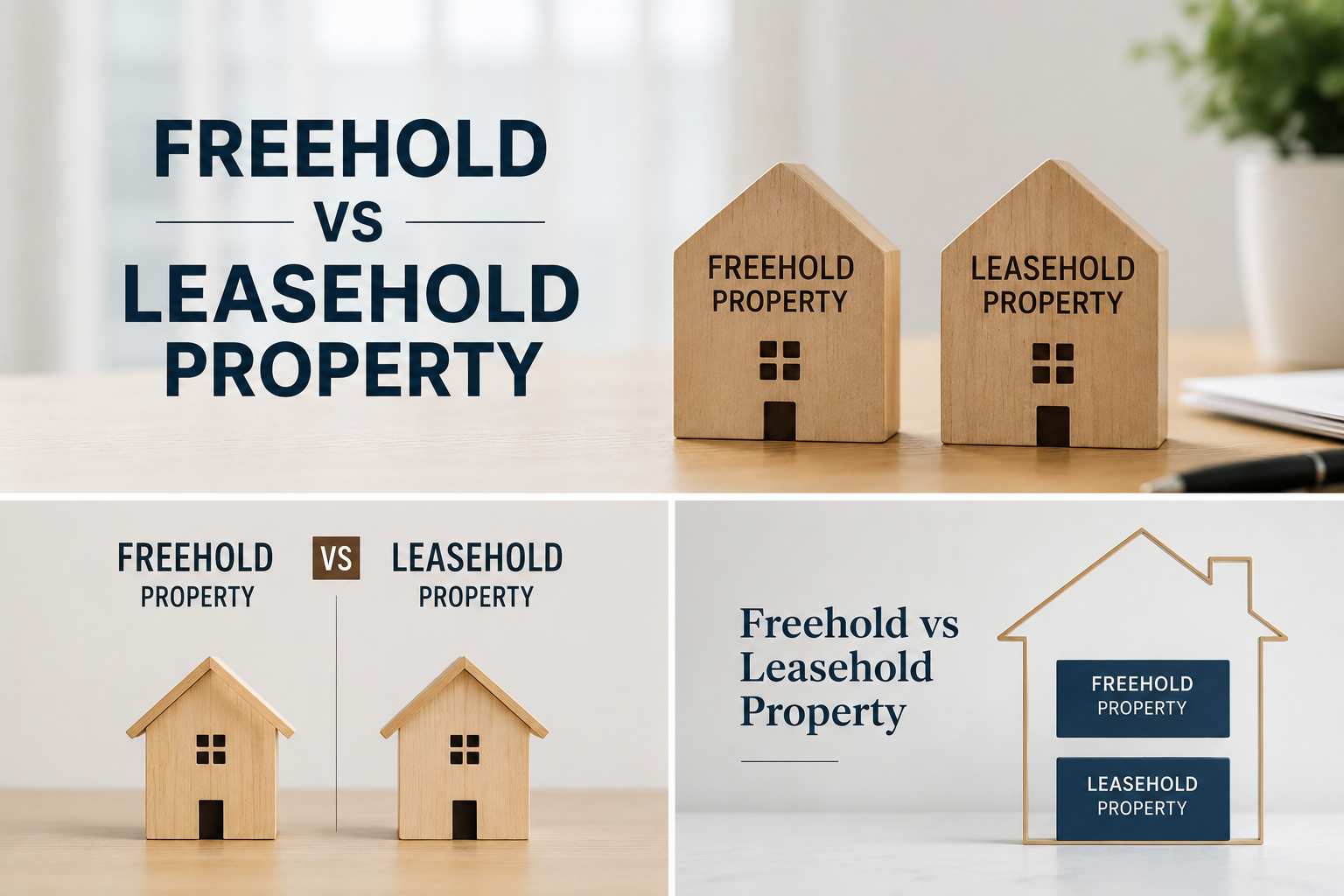
If you’re buying your first property, you’ve probably come across the terms “freehold” and “leasehold” without a clear explanation of what they actually mean for you as a buyer. The difference isn’t just legal terms — it affects your ownership rights, resale value, and long-term flexibility.
What Is Freehold Property?
With a freehold property, you own both the home and the land beneath it — completely and forever. There’s no expiry date on your ownership. You can sell it, pass it on to your family, or make changes to it, without needing anyone else’s permission (as long as you follow local rules).
What Is Leasehold Property?
With a leasehold property, you don’t own the land forever — you’re allowed to use it for a fixed number of years, often 30, 60, or 99 years, based on an agreement with the actual landowner (usually a government body). Once that time period ends, you may need to renew the agreement, or in some cases, the land goes back to the original owner.
Why This Distinction Matters
Freehold properties are generally easier to resell, mortgage, and pass on to family members without added legal complexity. Leasehold properties can come with restrictions on renovations, resale, or transfer, and their value can be affected as the remaining lease term shortens.
Who Should Choose a Freehold Property?
Freehold tends to be the better choice if:
- You’re buying a home you plan to keep long-term or pass on to your children
- You want the flexibility to renovate, extend, or resell without needing anyone else’s approval
- You’re a first-time buyer looking to avoid added legal complications
Leasehold can still make sense in specific situations, like when freehold options aren’t available in your preferred location, or the remaining lease term is long enough not to affect your plans. But between two similar properties, freehold is usually the simpler, safer pick.
How to Check Before You Buy
Always ask directly whether a property is freehold or leasehold before finalizing anything, and review the relevant documentation carefully. This single question can save you from future complications around resale or renovation.
Conclusion
Understanding this distinction early means fewer surprises later. If you’re unsure which type of property you’re looking at, it’s worth asking directly rather than assuming.
Have questions about a specific property’s ownership type? Talk to a Property Expert at VMR Group before you decide.